
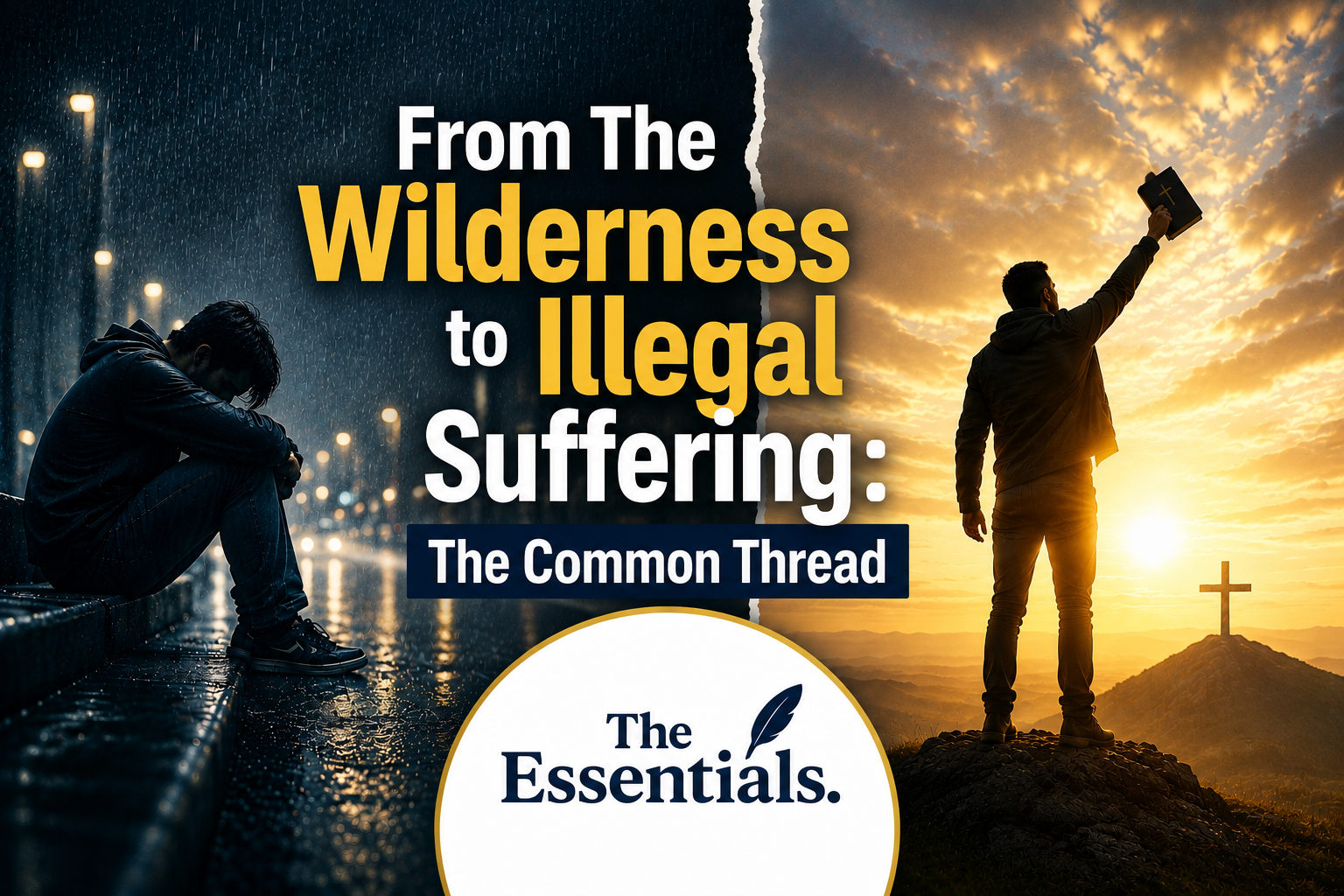
From the Wilderness to Illegal Suffering: The Common Thread
Sunday, July 12, 2026
Base texts : Isaiah 53 : 1-5 - John 1:29 - Romans 5:17
Over the past few weeks, the message has focused on crossing the wilderness: it's a stage that every child of God passes through, and no one is exempt from it. Today, Dr Raoul Wafo goes further and raises an essential question: why do so many Christians suffer illegally, meaning a suffering that has nothing to do with God's plan and that should not exist in their lives?
The central nuance of the message:
There is a major difference between:
- suffering in life (because of ignorance, sin, spiritual laws that are not respected): this kind of suffering should not be accepted
- suffering for the gospel (persecution, sacrifice for following Jesus): this belongs to anyone who walks with Christ, and is not a curse
Many believers confuse the two and end up accepting as "normal" what is actually a trap: thinking that the reward only exists in heaven, and that suffering here on earth is therefore "logical" or deserved. That is not what the Bible teaches.
The 5 Reasons Why Children of God Suffer Illegally
1. Ignorance
We can never enjoy what we do not know (Hosea 4:6). Suffering was never part of God's original plan for humanity. Ignorance literally "muzzles" the hand of God: it prevents Him from acting in our lives, not because He doesn't want to, but because we don't know what rightfully belongs to us.
"God doesn't answer what you say, but what you know and what you think about!"
— Dr Raoul Wafo
2. Not understanding what it really means to "be saved"
Many think salvation is just a ticket to heaven later on. But God did not put us on Earth in order to take us out of it — He put us on Earth so that His Kingdom could be displayed here through us. Sin brought about spiritual death (separation from God), which in turn led to physical consequences: sickness, curses, poverty, suffering. Being saved means accepting that Jesus paid the ransom to bring us out of all this, here and now, not just "afterward."
"Salvation is not a passport to go to Heaven, but a heavenly agreement to bring Heaven down to Earth."
— Dr Raoul Wafo
3. Not understanding the power of redemption
Everyone who is saved is called to live a different life (Romans 5:17). If God's promises are not showing up in someone's life, it's not because they are false — it's because there are Kingdom laws to discover and to respect. Much like natural laws: when we break them unknowingly, we render prayer "suspended," ineffective. The ransom has been paid once and for all: freedom is meant to be unconditional.
4. Not understanding that this power is sustained by faith
Redemption exists, but it's faith that activates it in a concrete life. Faith restores everything the enemy has stolen. No one can have real faith and live a defeated life at the same time (Colossians 2:10; 1:15-19). What God expects from us is not just to believe inwardly, but to speak, to declare that faith out loud.
"If you are anointed and you have no provision, you will end your life in frustration!"
— Dr Raoul Wafo
This word illustrates well why faith alone, without knowledge and the practical application of Kingdom laws, is not enough to bear lasting fruit.
5. Failing to overcome the consciousness of the curse
Many believers remain mentally attached to the idea that they are under a curse, a family fatality, or something similar. Yet wherever we keep exalting (giving credit to) the devil in our minds, the Holy Spirit cannot fully manifest. The devil's legal right over our lives was removed at the cross (Colossians 2:14-15) — what remains is only the power of intimidation, not authority. The response to this is spiritual pleading: asserting that right in the face of him.
Conclusion: The Posture to Adopt
The deserts of life are inevitable — no one escapes them, not even the most devoted child of God. But this reality should never become an excuse to legitimize suffering or settle into it. That would mean confusing the normal trial of the crossing with an illegal suffering that the cross has already answered.
The essence of today's message is therefore to bring nuance and balance: to remind us of the work of the cross, its consequences, and its implications for us — and above all, the posture to adopt in the face of challenges. That posture is holding onto the faith that we are on our way to a destination, first earthly before heavenly, and that reaching this destination will require the coming together of several conditions: knowledge, understanding of salvation, understanding of the power of redemption, the faith that activates it, and victory over the consciousness of the curse.
The wilderness is meant to be crossed, not lived in.
We're in this together, hold on.
Full message from Dr Raoul Wafo here :
Sonia Beguide
Loading preview…
Published on
Did this article speak to you?
Did this article touch you? Share your testimony →
Your thoughts
No sign-up. A first name and your message are enough. Comments are reviewed before they appear.
Loading comments…